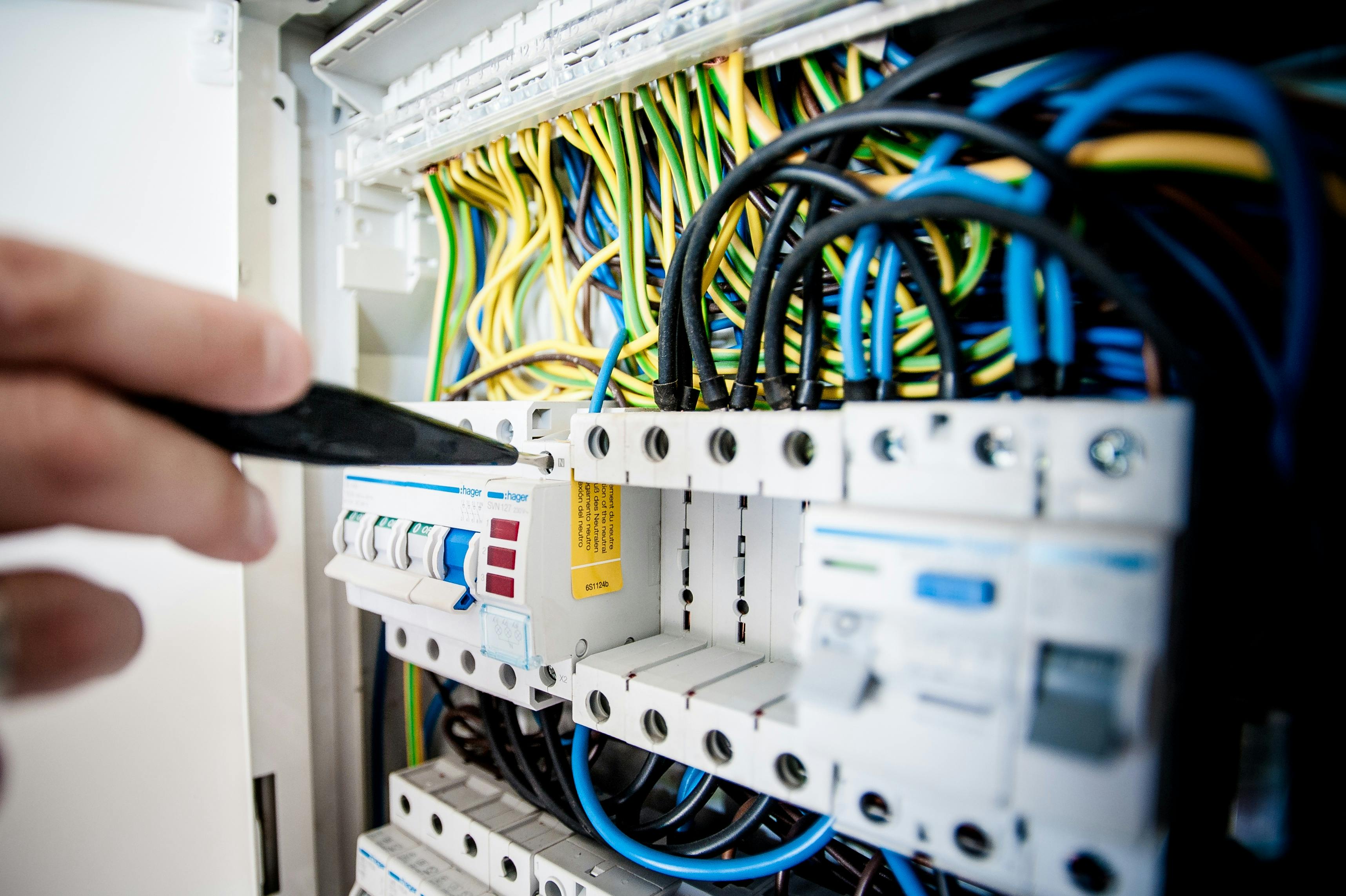
A drive panel, a controller cabinet and a motor control centre all need cooling — for completely different reasons and in different amounts. Treating them as the same thermal problem is why cooling units trip on some panels and run grossly oversized on others. This engineering guide covers the thermal profile of each panel type, the critical component limits, and how to size cooling for each.
Equipment Safe Operating Temperature Thresholds
Different industrial automation components possess radically different thermal tolerances. While a contactor can survive ambient temperatures of 50°C for years, a high-frequency microprocessor or electrolytic capacitor will suffer premature failure or unpredictable logic faults under the same conditions.
| Component / Equipment | Max Safe Internal Limit | Thermal Failure Mode & Symptom |
|---|---|---|
| Variable Frequency Drive (VFD / Inverter) | 40°C (Derate above 40°C, trips at 50°C) | IGBT over-temperature fault (F0004 / OH), DC bus capacitor electrolyte dry-out, thermal runaway. |
| Programmable Logic Controller (PLC CPU & I/O) | 45°C (Rated 55°C max per IEC 61131-2) | Random processor lockups, memory bit flipping, 4-20mA analog signal drift, communication module dropouts. |
| CNC Controller & Servo Packs | 45°C | Positioning errors, axis vibration/jitter, optical encoder synchronization loss, servo amplifier thermal trip. |
| MCC Switchgear & Contactors | 50°C | Contactor coil insulation degradation, bimetallic overload nuisance tripping, accelerated copper busbar oxidation. |
| Human-Machine Interface (Touchscreen HMI) | 45°C - 50°C | Touch matrix unresponsiveness, LCD crystal contrast deterioration, LED backlight inverter failure. |
| Industrial Robotics Controllers | 45°C | Multi-axis servo amplifier overcurrent trip, regenerative resistor heat buildup, safety PLC watchdog timeout. |
According to the Arrhenius chemical reaction rate equation applied to solid-state electronics, for every 10°C increase in continuous operating temperature above 40°C, the operating lifespan of semiconductor gate oxides and electrolytic filter capacitors drops by exactly 50%. A VFD or PLC power supply operating at 50°C inside an uncooled panel lasts less than half its rated operating lifespan.
VFD Panels: Why Drives Generate the Highest Thermal Loads
Variable Frequency Drives are the single largest source of internal cabinet heat in modern manufacturing facilities. Unlike passive electrical switchgear, a VFD continuously converts AC line voltage to DC, filters it across high-capacity capacitor banks, and switches it at carrier frequencies between 2 kHz and 16 kHz using Insulated Gate Bipolar Transistors (IGBTs).
The 2% to 3.5% Heat Dissipation Rule of Thumb
A well-designed inverter operates at 96.5% to 98% electrical efficiency. The remaining 2% to 3.5% of its total connected power is converted directly into pure heat inside the enclosure:
Qinternal (Watts) ≈ Drive Rated kW × 1000 × 0.03
For example, an extrusion line panel housing one 75 kW main extruder drive and two 22 kW auxiliary drives has a total connected drive capacity of 119 kW. At standard load, these drives dissipate approximately 3,570 Watts of thermal energy into an enclosure measuring barely 2 meters high by 1.2 meters wide.
 Figure 1: Thermal distribution within a 75 kW VFD cabinet. Heat from the rear heatsink creates severe vertical stratification, with temperatures reaching 58°C near the top if uncooled.
Without closed-loop refrigeration, internal cabinet air temperature will equalize with the heatsink surface, quickly exceeding 55°C even when plant ambient air is only 38°C.
PLC & Automation Panels: Low Heat, High Consequence of Failure
In contrast to drive panels, a Programmable Logic Controller (PLC) cabinet containing backplanes, CPU modules, ethernet switches, and 24V DC regulated power supplies generates relatively little heat — typically between 150W and 450W.
However, the financial consequence of thermal shutdown in a PLC panel is often far higher than a single motor trip. If a master PLC CPU locks up:
- The entire continuous manufacturing line or packaging system trips into emergency stop (E-stop).
- Analog process measurements (e.g., 4-20mA pressure and temperature transmitters) drift due to thermal coefficient changes in ADC converters, resulting in out-of-spec batches.
- Battery-backed RAM or solid-state flash memory can experience bit-flip corruptions during thermal cycling, requiring complete program re-flashing.
Why ambient ventilation fails PLC panels: Many maintenance engineers install simple louvers and filter fans because the wattage is low. However, shop-floor air carries humidity, conductive carbon dust, and chemical vapours. Over 6 to 12 months, this dirt coats the miniature surface-mount pins on processor boards, bridging 3.3V logic signals. Closed-loop panel cooling with a sealed Haima enclosure air conditioner guarantees an IP55 clean-room microclimate inside the cabinet.
MCC Panels: Busbar Losses and Severe Local Hotspots
Motor Control Centres (MCCs) house power distribution busbars, circuit breakers (ACBs/MCCBs), soft starters, and electromagnetic contactor stacks. Unlike VFDs, the heat is distributed across dozens of mechanical joints and contact points.
The primary thermal drivers in MCC cabinets include:
- I²R resistive losses: Current passing through horizontal and vertical busbars, cable lugs, and crimp terminations generates continuous heat proportional to the square of the operating current.
- Contactor holding coils: AC contactor coils consume continuous holding power, each contributing 10W to 40W of heat continuously.
- Thermal stratification: Hot air naturally rises to the top compartments. The top cubicles in a 2.2-meter tall MCC frequently operate 12°C to 18°C hotter than the bottom cubicles. Circuit breakers installed in the upper bays experience nuisance tripping because their thermal bimetallic trip curves shift downward under elevated ambient heat.
CNC Machine Enclosures: The Dual Menace of Heat and Cutting Mist
CNC machining centres, turning centres, and grinding machines present a unique operating environment. The machine's electrical cabinet is positioned directly adjacent to cutting spindles operating with flood coolant and aerosolized neat oil mist.
If maintenance attempts to cool a CNC cabinet by mounting standard exhaust fans, the cooling fan draws micron-sized oil droplets directly into the electronics. Oil mist settles on optical encoders, high-voltage servo drive terminals, and Fanuc, Siemens, or Mitsubishi CNC power supplies. The oil degrades wire insulation, attracts metal grinding dust, and causes catastrophic phase-to-phase flashovers.
CNC machine cabinets require hermetically isolated closed-loop cooling. The internal air circuit recirculates clean, dry cabinet air across the evaporator coil, while the external condenser circuit rejects heat into the machine shop without any physical air exchange.
Robotics & High-Density Servo Cabinets
6-axis articulated robots and cartesian pick-and-place gantries utilize compact multi-axis servo drive packs. During rapid acceleration and deceleration cycles, dynamic regenerative braking shunts energy into braking resistors or regenerative bus modules.
In robotic cells operating at high cycle rates (e.g., automotive spot welding, press tending, or palletizing), braking energy creates severe cyclical heat spikes. A panel air conditioner with rapid dynamic thermostat response and continuous air circulation prevents these thermal spikes from tripping servo amplifier overcurrent thresholds.
Where India's Automated Manufacturing Clusters Sit
Industrial automation density in India is concentrated in specific geographic manufacturing corridors, each characterized by distinct ambient challenges:
- Pune-Chakan-Talegaon & Aurangabad (Maharashtra): Heavy concentration of automotive OEMs (Tata Motors, Bajaj, Mahindra) and tier-1 component suppliers with automated robotic welding lines and VFD test benches. May ambient temperatures reach 44°C.
- NCR (Gurgaon, Manesar, Faridabad, Greater Noida): High-density sheet metal pressing, injection moulding, and robotics assembly. Extreme summer temperatures reaching 47°C to 48°C combined with fine airborne dust.
- Chennai-Sriperumbudur-Oragadam (Tamil Nadu): Automotive and electronics manufacturing corridor (Hyundai, Renault-Nissan, Foxconn). Persistent high relative humidity (70% - 85%) requiring strict closed-loop condensation control.
- Ahmedabad-Sanand-Vadodara (Gujarat): Heavy engineering, CNC machine tool builders, chemical automation, and plastics machinery. Summer ambient temperatures regularly exceed 48°C.
- Bengaluru-Hosur & Coimbatore: Precision machining, CNC aerospace components, textile automation, and electronics assembly.
5 Sizing Mistakes That Damage Automated Panels
Over two decades of engineering control panel cooling systems, we see the same five critical sizing errors repeated across industrial plants:
1. Sizing for Nameplate Average Instead of Worst-Case Peak
Sizing cooling based on steady-state continuous current rather than maximum duty cycle. When a press line ramps to 110% rated speed during afternoon production catch-up, drive heat output jumps by 30%, overwhelming an undersized cooling unit.
2. Ignoring External Solar and Radiant Heat Gain
Cabinets installed near uninsulated metal sheet walls, skylights, or adjacent to industrial heat sources (forging presses, curing ovens, injection moulding barrels) absorb between 150W and 300W of external radiant heat per square meter of exposed surface.
3. Short-Circuiting the Cold Air Supply
Mounting the panel AC output diffuser directly facing a flat plate or wire duct just 100mm away causes cold supply air to bounce immediately back into the AC intake grille. The controller reads 28°C and shuts the compressor down, while the VFD heatsink at the bottom of the enclosure sits at 52°C.
4. Leaving Condensate Management to Chance
In high-humidity climates (like Chennai, Mumbai, or Kolkata during monsoon), an enclosure AC extracts up to 1.5 litres of atmospheric moisture per hour if cabinet seals leak. Without dedicated exterior drainage or an active condensate evaporating system, water can pool inside the panel bottom tray.
5. Omitting Cabinet Door Interlock Switches
When operators or maintenance staff prop panel doors open with fans blowing while the AC runs, humid room air condenses immediately on the freezing evaporator coil, forming ice blocks that choke cooling airflow entirely. A door limit switch must shut off the AC whenever cabinet doors are unlatched.
Sizing by Panel Type: Quick Reference
| Panel Category | Primary Heat Source | Recommended Cooling Technology | Typical Capacity Sizing |
|---|---|---|---|
| VFD Drive Panels | IGBT switching & DC bus capacitors (2-3% of kW) | Closed-Loop Panel Air Conditioner | 1,000W to 4,000W per bay |
| PLC & Automation | Power supplies, CPU, backplanes (150W - 400W) | Compact Panel AC or Heat Exchanger | 500W to 1,000W |
| MCC Switchgear | Busbar I²R losses & contactor coils | High-CFM Panel AC with top air ducting | 1,500W to 3,000W |
| CNC Control Cabinets | Servo packs & CNC power supply unit | Hermetic IP55 Panel AC with cleanable filter | 1,000W to 2,000W |
Need Your Panel Heat Load Calculated?
Haima’s technical application engineers calculate exact thermal dissipation based on your specific drive ratings, PLC layouts, and plant ambient extremes. Request a verified sizing sheet for your control panels.
Request Free Panel Heat Sizing