Four methods can cool an electrical panel. They are not interchangeable. Pick the wrong one and it will work perfectly through winter, then fail in the third week of May — exactly when your production targets are highest and your line can least afford to stop.
Why Electrical Panels Overheat
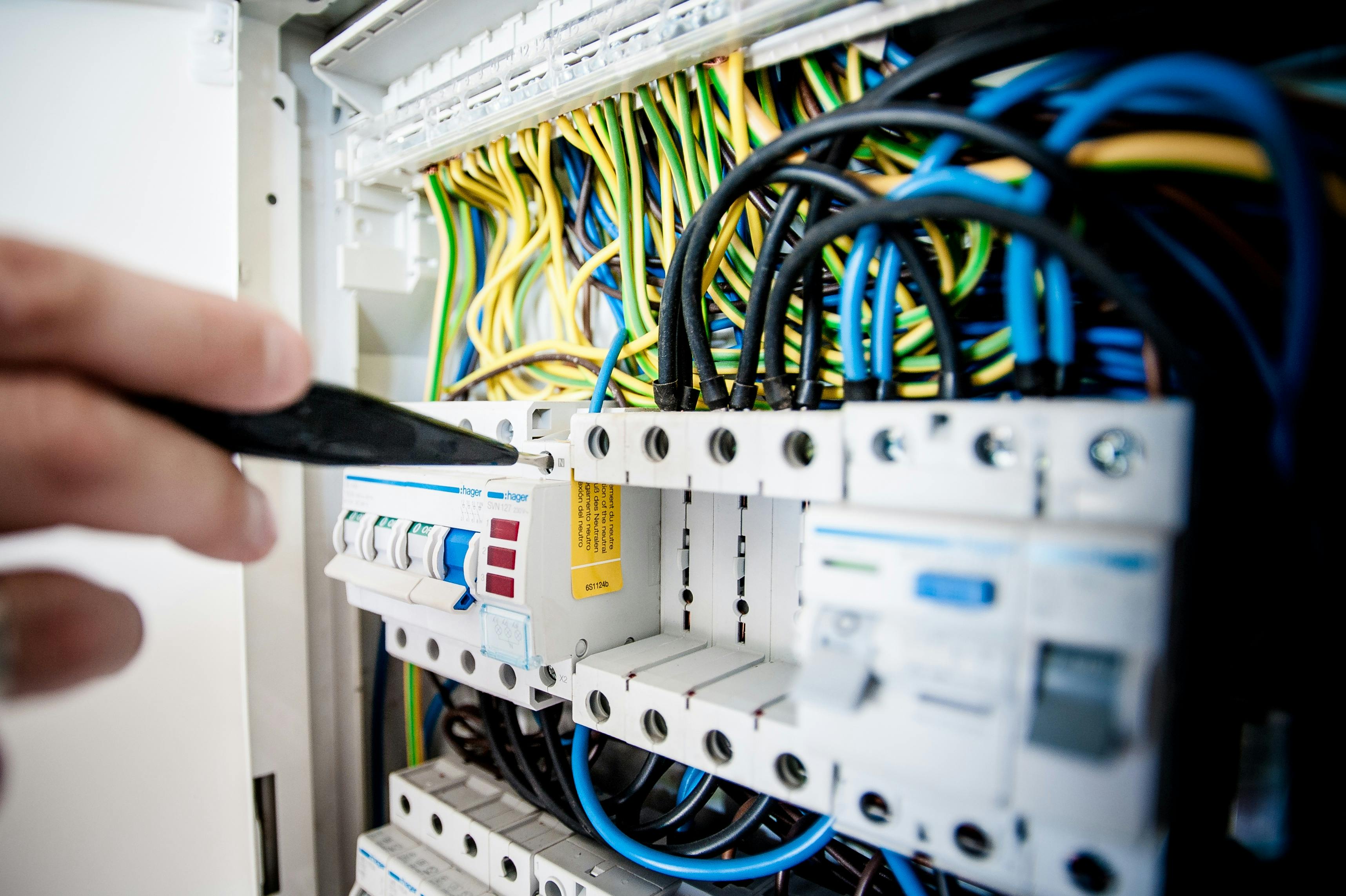
The heat is generated inside the panel, by the equipment in it. Every drive, power supply, transformer and contactor converts a percentage of what passes through it into heat. In a sealed enclosure that heat has nowhere to go.
A variable frequency drive dissipates roughly 2.5% of its rated power. A single 55kW drive produces up to 1,650W of continuous heat. Pack four drives, a transformer and control gear into one cabinet and the internal temperature climbs well above the room all day.
Two changes over the last decade made this worse. Panels are packed far more densely than they used to be, and the electronics inside are considerably more temperature-sensitive than the contactors and relays they replaced.
“A sealed panel with four mid-size drives generates enough continuous heat to warm a small room. The enclosure has no way to release it. That is the entire problem.”
The One Question That Decides Everything
Before you compare a single product, answer this: can the air inside your enclosure be allowed to mix with the air in your plant?
If your plant air is clean, dry, and cooler than you want the panel to be, filtered ventilation will do the job for a fraction of the cost of anything else.
If it is dusty, oily, humid, corrosive, or simply hotter than your target internal temperature, you need a closed-loop method — and the choice narrows to a panel air conditioner or a heat exchanger.
The Plant Air Rule — Answer This Before You Compare Products
Almost every wrong specification in this category traces back to answering this one question optimistically. Teams consistently underestimate what is actually suspended in their plant air. Walk to the panel, open it, and look at the inside of the door.
The Four Cooling Methods
Each works well inside a specific set of conditions and fails badly outside them. Here is where each one belongs.
1. Filtered Ventilation
A fan draws plant air through a filter into the enclosure, and a vent lets it out. Cheapest by a wide margin, and it draws almost no power.
The limit is absolute: ventilation can never bring the panel below room temperature. In practice it holds the enclosure 5–10°C above ambient. If your shop floor hits 40°C in May, the panel sits at 45–50°C — above the operating limit of most drives and controllers.
The hidden cost is filter maintenance. In a dusty plant that becomes a weekly task per panel, and a clogged filter is worse than none at all, because the panel then neither ventilates nor sheds heat.
2. Air-to-Air Heat Exchanger
Two separate air circuits pass either side of a transfer core. Panel air stays sealed inside; plant air carries the heat away without the two ever mixing. The enclosure keeps its IP rating and stays clean.
Like ventilation it cannot go below ambient — it typically holds the panel 10–15°C above the room. But it does so without letting anything in, which is often the entire reason to choose it.
The right answer when plant air is contaminated but ambient is genuinely moderate, and the heat load is low to medium.
3. Air-to-Water Heat Exchanger
The same closed-loop principle, but heat is rejected into a water or coolant circuit instead of into plant air. Highest capacity available, and often the only workable answer where surrounding air is extreme — beside a furnace, in a foundry, near a coke oven.
It depends on having a chilled or cooling water supply. Where a plant circuit already exists this is straightforward. Where it does not, adding one for a handful of panels rarely justifies itself.
4. Panel Air Conditioner (The Only Method That Goes Below Ambient)
A sealed refrigeration circuit with two separate air paths. The internal circuit cools and recirculates panel air; the external circuit rejects that heat to the plant. The two never mix, so the enclosure stays sealed and its IP rating is preserved.
This is the only method that can hold the panel below room temperature, and the only one whose performance does not collapse as the plant heats up — up to the unit's rated ambient limit.
That rated ambient is the specification that decides success in Indian conditions, and it is the one most often glossed over in a quotation. Explore the Haima Panel Air Conditioner range to see how smart units maintain 35°C even in 50°C factory ambients.
Matching the Method to Your Plant Conditions
India is not one climate. The right method genuinely changes across the country, and the deciding factor is rarely temperature alone.
| Method | Below ambient? | Panel sealed? | Belongs in |
|---|---|---|---|
| Filtered ventilation | ✕ No | ✕ No | Clean, cool plants under 35°C — electronics assembly, clean machine shops |
| Air-to-air exchanger | ✕ No | ✓ Yes | Contaminated air, moderate ambient — Bangalore, Pune, coastal inland |
| Air-to-water exchanger | ✓ Yes | ✓ Yes | Furnace-adjacent, foundries, steel — where a water circuit already exists |
| Panel air conditioner | ✓ Yes | ✓ Yes | Above 35°C ambient, dusty or oily air, any critical production panel |

Figure 1: The two-circuit principle. Plant air never reaches the electronics, which is why the enclosure keeps its IP rating.
Warning Signs You Have the Wrong Method
Do not wait for a trip to tell you the cooling is inadequate. Train your team to spot these first:
- Panel doors feel hot to the touch during afternoon shifts
- Drives log recurring OH1 or OHT thermal faults in summer but not in winter
- Auxiliary fans run continuously while internal air stays hot
- Filters need cleaning weekly rather than monthly
- Someone has propped the panel door open as a workaround
- Machine faults cluster in the afternoon and clear by the next morning
- Internal temperature exceeds 40°C on any summer measurement
Conclusion
Cooling method is not a purchasing preference. It is a specification decision driven by two numbers — the heat generated inside your enclosure, and the maximum ambient beside it in your hottest month.
Calculate both before you compare products. Then match the method to the conditions rather than to the budget line, because a method that cannot physically hold your panel below its limit will not do so at any price.
Audit your panels before summer, not during it. The plants that avoid thermal downtime are the ones that measured in February. Review our Haima industrial enclosure cooling solutions to protect your automation assets year-round.
Not Sure Which Method Your Panel Needs?
Send us five details and we will run the heat load calculation and tell you what your panel actually requires — including the cases where the answer is that you do not need active cooling at all.
- Enclosure dimensions and material
- Connected load of everything inside the panel
- Highest ambient temperature beside the panel in summer
- Your target internal temperature
- What is in your plant air — dust, oil mist, fibre, chemical vapour